Social-Emotional IEP Goals for Autism: A Parent's Practical Guide
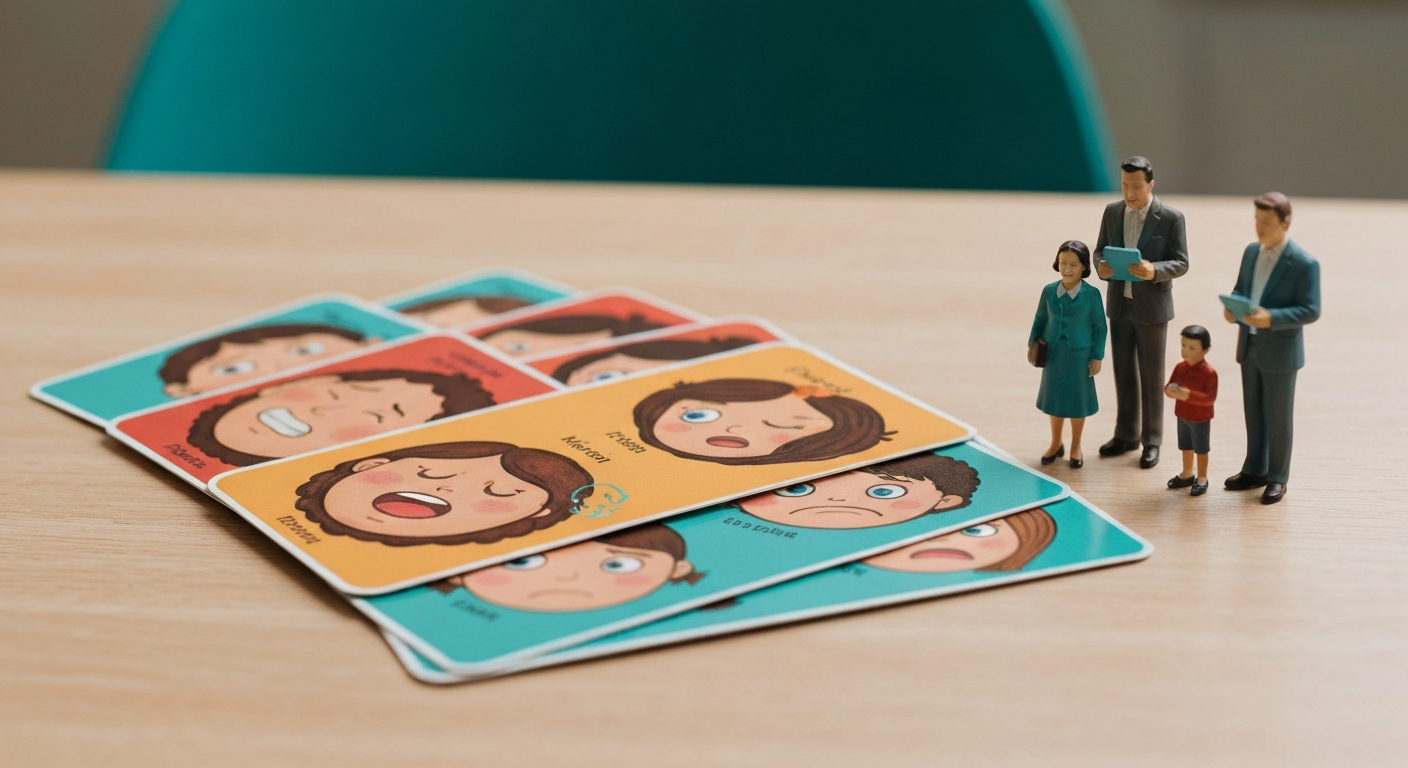
If you have ever sat in an IEP meeting and watched the team breeze through reading and math goals only to stall when someone says, "And we'll work on social skills," you are not alone. Social-emotional IEP goals for autism are some of the most important goals your child will ever have, and they are almost always the vaguest, the hardest to measure, and the easiest to let slip. This guide is written for you, the parent at the table who wants to make sure those goals are real, specific, and actually taught. We will walk through why these skills matter so much, what strong goals look like, who delivers the instruction, and how to keep an eye on progress without needing a special-education degree.
A quick, honest note before we dive in: this is an informational guide, not clinical advice. Every child is different, and the right goals should be written by a team that knows your child well and grounded in current evaluation data. Think of what follows as a way to become a more confident, better-informed partner in that conversation.
Why Social-Emotional Skills Matter So Much for Autistic Kids
For many autistic children, academics are not the hardest part of the day. The hardest part is the lunchroom, the group project, the unstructured recess, the moment a routine changes without warning. Social and emotional skills are the invisible curriculum running underneath everything else, and when a child struggles to read a peer's tone, manage a wave of frustration, or ask for a break before they reach a breaking point, the whole day gets harder than it needs to be.
These skills are not a "nice to have" tacked on after the real learning. Research consistently links social-emotional competence to friendships, mental health, and long-term outcomes like employment and independence. For autistic kids specifically, explicit instruction here can be the difference between a child who feels capable and connected and one who feels constantly overwhelmed and on the outside looking in.
It also helps to reframe the word "social" here. We are not trying to make an autistic child mask. Good social-emotional goals give a child more tools and more options, so they can participate when they want to, advocate for what they need, and regulate big feelings in ways that keep them safe and learning. The goal is capability and self-advocacy, not conformity.
Why These Goals Are Often the Vaguest on the IEP
Here is the uncomfortable truth: social-emotional iep goals are frequently the weakest in the entire document. You have probably seen ones like "Student will improve social skills," "Student will demonstrate appropriate behavior," or "Student will increase self-regulation." These sound reasonable in the moment. But read them again the way a new teacher would. What does "appropriate" mean? Improve from what? How would anyone ever know if it was met?
Social skills are abstract and hard to count, which is exactly why they get written loosely. A reading goal can lean on words-per-minute and accuracy percentages; those numbers feel safe. Emotion and behavior feel squishier, so teams reach for soft language. But vague goals cannot be measured, taught with precision, or defended if your child does not progress. A goal you cannot measure is a goal nobody is truly accountable for.
Your job as a parent is not to write the goals yourself. It is to notice when a goal is too fuzzy to mean anything and to ask the team to sharpen it. A simple, powerful question at the meeting is, "How exactly will we know my child met this goal?" If the team cannot answer in concrete terms, the goal needs more work before you sign off on it.
The SMART Standard Applied to Social and Emotional Goals
The fix for vague goals is the SMART framework: Specific, Measurable, Achievable, Relevant, and Time-bound. Every solid IEP goal, social-emotional ones included, should answer four questions. What exactly will the child do? Under what conditions? To what level of success? And measured how? When a goal answers all four, it stops being a wish and becomes a plan.
Let me show you the transformation with a few weak-versus-strong rewrites, because seeing the contrast makes it click.
Notice what the strong versions all share. They name the condition ("when frustrated," "during structured social activities"), the observable behavior ("initiate an interaction," "use a taught coping strategy"), the criterion ("4 out of 5," "80 percent"), and the measurement method ("behavior data," "observation logs"). That is the difference between a goal that gets taught and tracked and one that quietly evaporates.
The Common Social-Emotional Goal Areas (With Examples)
Social-emotional development is not one skill; it is a cluster of related ones. When you understand the common categories, you can look at your child's IEP and ask, "Are we addressing the areas that actually matter most for my kid right now?" Here are the areas teams most often target, with the kind of skill each one represents.
These skills build on one another and are best targeted a few at a time rather than all at once. A child who cannot yet name their own anger is not ready for a complex perspective-taking goal, and that is completely fine. Good IEP teams sequence these areas, starting where the child actually is and moving forward in small, teachable steps.
Example Goals You Can Bring to the Table
Sometimes it helps to walk into a meeting with examples in hand, not to dictate the goals but to give the team a concrete starting point. Here are sample social skills iep goals for autism. Treat them as templates to adapt to your child's baseline and needs, never as one-size-fits-all answers.
As you read these, picture your own child. Would this goal stretch them in a way that feels reachable within a year, and would meeting it actually make their day easier? Those two questions keep goals both ambitious and humane.
The Baseline Problem: You Cannot Measure Growth Without a Starting Line
Every goal you just read assumes one thing that is easy to skip: a clear baseline. A baseline is the honest description of where your child is right now, before instruction. "In 4 of 5 opportunities" only means something if we know your child currently does it in, say, 1 of 5. Without that starting line, there is no way to prove growth, and there is no way to tell whether a goal was too easy or wildly out of reach.
A strong baseline is specific and recent. "Student currently initiates a peer interaction in approximately 1 of 5 structured opportunities and requires an adult prompt to do so" is a real baseline. "Student has difficulty with peers" is not. If the present levels section of the IEP describes your child only in soft generalities, that is a sign the goals built on top of them will be soft too.
This is also where you hold information the school often lacks. You see your child across settings the team never observes: birthday parties, the grocery store, the meltdown after a long day. Bringing your own observations to the baseline conversation makes the starting line more accurate and the goals more meaningful. Do not assume the school has the full picture, because they usually do not.
Who Actually Teaches These Skills, and How
One of the most common misunderstandings is that social-emotional goals will somehow be absorbed just by being around other kids. They will not. These are skills that have to be explicitly taught, practiced, and reinforced, and a good IEP names who is responsible for that instruction. Several professionals may be involved, and it helps to know who does what.
The how matters as much as the who. Effective social-emotional instruction tends to happen through structured social skills groups, where a small group of kids practices targeted skills with adult coaching; through push-in support, where a specialist comes into the classroom and helps the child use skills in the real environment; and through embedded practice across the school day. Ask the team plainly: who is delivering this instruction, how often, in what setting, and for how many minutes? If the answer is vague, the service may be vague too.
Generalization: Skills Have to Work Outside the Therapy Room
A child can perform a coping strategy perfectly in the counselor's quiet office and still fall apart in the noisy cafeteria. That gap is one of the central challenges of social-emotional learning for autistic kids, and it has a name: generalization. A skill is not truly learned until it shows up where it is actually needed, across people, places, and situations.
This is why the strongest goals include the phrase "across settings" or "across two or more environments." A goal that is only ever measured in a one-on-one session with a familiar adult tells you very little about your child's real day. Push to have goals practiced and tracked in the classroom, at recess, in transitions, and anywhere the skill genuinely matters. The therapy room is the rehearsal; the rest of the school is the performance.
You can support generalization at home, too. When you and the team use the same language and the same strategies, your child gets consistent practice across the two biggest parts of their world. Ask what coping menu, what break signal, or what social script the school is using, and mirror it at home. Consistency between home and school is one of the most powerful accelerators of progress there is.
Tracking Progress With Real Behavior Data
Once you have strong goals, the next question is whether anyone is actually measuring them. Social-emotional progress is tracked with behavior data: frequency counts (how many times a skill happened), percentages (how often out of total opportunities), duration (how long a child stayed regulated), and observation notes. This data is what turns "I think he's doing better" into something you can see and trust.
You are entitled to see this data, not just a checkbox that says "progressing." At progress-report time, ask for the underlying numbers. Is your child going from 1 of 5 to 3 of 5 opportunities? Has the frequency of meltdowns dropped from daily to twice a week? If the only report you get is a vague "making adequate progress," politely ask what the data shows. Patterns over time tell the real story, and a single good or bad day rarely does.
This is also where keeping your own simple records pays off. You do not need anything fancy: jotting down what set off a hard moment, the time of day, what helped, and how long it lasted gives you a picture the school cannot see. When you can say, "At home I'm noticing meltdowns cluster right after school on days with a substitute," you hand the team a clue they could never have found on their own. Daily patterns, tracked over weeks, reveal triggers and wins that no single observation captures.
Bringing It All Together at the Table
Strong social-emotional goals do not happen by accident. They happen when a parent walks into the meeting knowing what vague looks like, what SMART looks like, and which skill areas matter for their child. You do not have to be the expert in the room. You just have to be the person who keeps asking, kindly and persistently, "How will we know this is working, and where will my child practice it?"
The most useful thing you can carry into any meeting is your own observations, gathered over time. When you track the daily patterns of your child's emotions and behavior, the triggers, the strategies that work, and the small wins, you stop guessing and start showing. That record turns you from a worried parent into an informed partner and gives the team the ground truth they need to write goals that fit your child. Bring the data, ask the questions, and keep the focus where it belongs: on giving your child more tools, more confidence, and more good days.
Keep it all in one place
Advocate Binder helps you organize documents, track goals, prep for meetings, and manage insurance — calmly, in one app.
Start your free trial