Self-Regulation IEP Goals: Helping Your Child Stay Calm and Focused
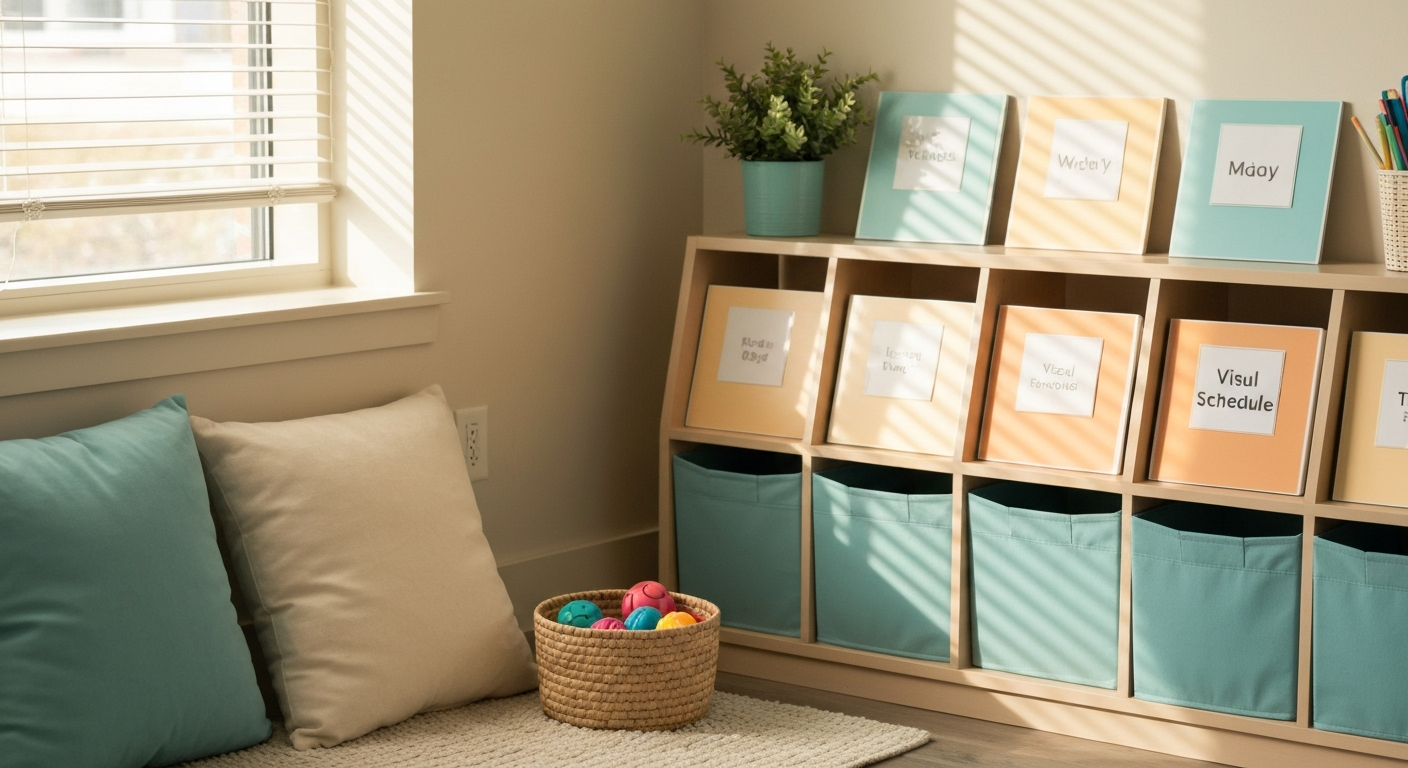
If your child struggles to manage big emotions, stay focused during class, or handle frustration without melting down, you're not alone. Many parents watch their kids work so hard just to keep it together at school, and it can be heartbreaking. The good news is that self-regulation IEP goals can give your child the targeted support they need to develop these critical skills. Self-regulation—the ability to manage emotions, attention, and behavior—isn't just about "being good." It's a fundamental skill that affects learning, friendships, and your child's sense of confidence. When these skills are specifically addressed in an IEP, your child gets the tools, strategies, and support to succeed.
This article will walk you through everything you need to know about self-regulation IEP goals: what they are, why they matter, how to write them effectively, and real examples you can adapt for your child's unique needs. Whether you're preparing for an upcoming IEP meeting or trying to understand why your child's current goals aren't working, you'll find practical guidance here.
What Is Self-Regulation and Why Does It Matter?
Self-regulation is your child's ability to manage their emotions, attention, and behavior in response to different situations. It's what helps them calm down when they're upset, focus on a math worksheet when they'd rather be playing, or ask for help instead of throwing their pencil across the room. For many children with disabilities—including ADHD, autism, anxiety disorders, sensory processing challenges, and others—self-regulation doesn't come naturally. Their brains are wired differently, and they need explicit teaching and support to develop these skills.
Think of self-regulation as having three main components: emotional regulation (managing feelings), behavioral regulation (controlling impulses and actions), and cognitive regulation (directing attention and thinking). When a child struggles with any of these areas, it impacts everything else. They might know their multiplication facts but can't focus long enough to complete the worksheet. They might desperately want friends but react too intensely when someone teases them. Self-regulation challenges create a ripple effect that touches academics, social relationships, and self-esteem.
That's why addressing self-regulation in the IEP is so important. Under IDEA (the Individuals with Disabilities Education Act), if a child's disability affects their ability to benefit from education, the IEP team must address it. Self-regulation difficulties absolutely affect educational performance—not just in obvious ways like behavior problems, but in how well your child can learn, participate in class, and develop age-appropriate social skills.
When Should Self-Regulation IEP Goals Be Included?
Not every child with an IEP needs self-regulation goals, but many do. Your child might benefit from these goals if they frequently have meltdowns or shutdowns at school, struggle to transition between activities, can't focus on tasks for age-appropriate periods, have difficulty recovering from frustration or disappointment, react impulsively without thinking through consequences, or struggle to identify and communicate their emotions.
The key question is whether self-regulation challenges are preventing your child from making progress in school. If your child is smart and capable but their inability to manage emotions or attention is holding them back, that's a clear signal that self-regulation goals should be part of the IEP. Sometimes these goals appear in the behavioral or social-emotional section of the IEP. Other times they're woven into academic goals because self-regulation is so connected to learning.
It's worth noting that for children with Section 504 plans rather than IEPs, self-regulation support typically comes through accommodations and modifications rather than specific measurable goals. However, if your child has a 504 plan and needs substantial support for self-regulation, it might be worth requesting an IEP evaluation to see if they qualify for more comprehensive services.
The Essential Components of Effective Self-Regulation IEP Goals
Just like any IEP goal, self-regulation goals must be SMART: Specific, Measurable, Achievable, Relevant, and Time-bound. A goal like "Johnny will improve his self-control" sounds nice but isn't helpful because there's no way to measure it or know when it's been achieved. Instead, effective goals break down self-regulation into specific, observable behaviors that can be tracked and measured.
Every strong self-regulation goal should include these elements: a clear description of the specific skill or behavior your child will demonstrate, measurable criteria so everyone knows what success looks like, the conditions under which your child will use the skill (like during transitions, in the classroom, when frustrated), and a timeframe for achieving the goal. For example, instead of saying a child will "stay calm," a better goal specifies what staying calm looks like—maybe it's using a calm-down strategy, keeping their body in their personal space, or using words instead of physical actions.
The baseline data is also crucial. Where is your child starting from? If they currently use a coping strategy about 1 out of 10 times they're frustrated, that's your baseline. The goal might be to increase that to 7 out of 10 times. If they can currently focus on independent work for 3 minutes, the goal might build toward 10 or 15 minutes. Starting with accurate baseline data ensures the goal is both challenging and achievable—not so easy that your child doesn't grow, but not so hard that they're set up to fail.
Examples of Self-Regulation IEP Goals for Different Challenges
Let's look at concrete examples you can adapt for your child. Remember, these should be tailored to your child's specific needs, current abilities, and the situations where they struggle most.
For emotional regulation: "When experiencing frustration during academic tasks, [Child] will use a taught coping strategy (such as taking three deep breaths, using a fidget tool, or requesting a break) before reacting, in 4 out of 5 opportunities, as measured by teacher observation and data collection, by [date]." Or: "When feeling strong emotions (angry, sad, frustrated), [Child] will identify the emotion using a feelings chart or words, with no more than one verbal prompt, in 8 out of 10 instances across school settings, by [date]."
For attention and focus: "During independent work time, [Child] will remain on-task for 15-minute intervals without redirection, using a visual timer and check-in system, for 4 out of 5 work sessions daily, by [date]." Or: "When transitioning between activities, [Child] will follow the transition routine (check visual schedule, gather materials, move to new location) within 3 minutes and without verbal or physical disruption, in 80% of transitions, by [date]."
For impulse control: "During classroom instruction, [Child] will wait to be called on before speaking (raising hand and waiting for acknowledgment) in 7 out of 10 opportunities, as measured by teacher data collection, by [date]." Or: "When facing a problem or conflict with peers, [Child] will stop and use the problem-solving steps taught (stop, think, choose a solution, act) before reacting, in 3 out of 4 conflict situations, by [date]."
Notice that each goal specifies exactly what the child will do, how often they'll do it, and how it will be measured. They're written in positive terms—what the child will do, not what they'll stop doing. This is important because it gives your child something to work toward rather than just focusing on what's wrong.
Teaching Strategies and Supports That Make Goals Achievable
Writing a goal is just the first step. Your child needs explicit teaching, practice, and support to actually achieve these self-regulation goals. This is where the IEP's accommodations, modifications, and specially designed instruction come in. The IEP should specify not just what your child will accomplish, but how the school will help them get there.
Effective strategies often include direct instruction in self-regulation skills through social-emotional learning curricula or counseling sessions, visual supports like feelings charts, choice boards, visual schedules, or first-then boards, sensory tools such as fidgets, wobble cushions, noise-canceling headphones, or sensory breaks, environmental modifications like a calm-down corner, preferential seating, or reduced visual distractions, and consistent routines with clear expectations and predictable patterns that help children feel secure.
Many children also benefit from self-monitoring tools. This might be a simple checklist where your child tracks their own behavior, a visual timer that helps them see how much time remains for a task, or a point system that provides immediate feedback. The key is finding what works for your specific child. Some kids respond well to sensory input like a weighted lap pad; others find that distracting. Some children love earning points or rewards; others feel more pressure from that system. The IEP team should be willing to try different approaches and adjust based on what actually helps your child succeed.
It's also important that all the adults working with your child are on the same page. The general education teacher, special education teacher, paraprofessional, counselor, and any other support staff should know what strategies your child is learning and use consistent language and approaches. When one teacher responds to frustration one way and another responds completely differently, it's confusing for your child and makes it harder for them to learn the skills.
Measuring Progress and Knowing When to Revise Goals
Your child's IEP should specify how progress will be measured and how often you'll receive updates. For self-regulation goals, common data collection methods include frequency counts (how many times a behavior occurs), duration recording (how long your child stays on task or how long a meltdown lasts), ABC data (Antecedent-Behavior-Consequence observations that help identify triggers and patterns), or rating scales completed by teachers or your child.
You should receive progress reports at least as often as parents of general education students receive report cards—typically quarterly. These reports should include actual data, not just general comments like "making progress" or "needs improvement." You want to see numbers: Is your child using coping strategies 3 out of 10 times or 6 out of 10 times? Are they staying focused for 5 minutes or 12 minutes? This concrete data helps you understand what's really happening and whether the current approach is working.
If your child isn't making progress toward a goal after a reasonable time—usually a grading period or two—something needs to change. Don't wait until the annual IEP meeting if a goal clearly isn't working. You can request an IEP team meeting at any time to discuss concerns and revise goals or strategies. Maybe the goal was too ambitious and needs to be broken into smaller steps. Maybe the teaching strategies aren't the right fit for your child. Maybe your child has actually mastered this goal and is ready for a new challenge. The IEP is a living document that should evolve as your child grows and their needs change.
Common Pitfalls to Avoid
When working on self-regulation IEP goals, watch out for a few common problems. First, avoid purely compliance-focused goals that emphasize obedience rather than skill-building. A goal like "will comply with teacher directions" doesn't teach self-regulation—it just demands compliance. Better goals focus on building the actual skills your child needs, like recognizing emotions, using coping strategies, or problem-solving.
Another pitfall is setting goals that are really about making life easier for adults rather than helping your child. Yes, everyone benefits when a child can regulate their emotions and behavior, but the goal should genuinely help your child participate in education and develop skills they'll use throughout life. Ask yourself: Is this goal helping my child learn to navigate their world, or is it just about making them less disruptive?
Also watch for vague language or unmeasurable criteria. Terms like "appropriate behavior," "most of the time," or "as needed" mean different things to different people. Insist on specific, observable descriptions and clear numbers. And be cautious about goals that expect perfection or don't account for bad days. Even adults with excellent self-regulation skills have moments when they're overwhelmed or reactive. Your child's goals should reflect realistic expectations with room for being human.
Working Collaboratively with Your IEP Team
You know your child better than anyone else on the IEP team. You see them at home, you know what triggers them, you know what strategies have helped in the past. This knowledge is invaluable when developing self-regulation goals. Don't be shy about sharing your observations and insights during IEP meetings.
At the same time, listen to what teachers and specialists are observing at school. Sometimes children show different behaviors in different settings. Your child might hold it together all day at school and then fall apart at home—not because school is easy, but because they're using all their energy to cope until they reach the safety of home. Or they might struggle more at school where there are more demands and distractions. Both perspectives matter.
Come to IEP meetings prepared with specific examples and, if possible, your own data. Keep notes about patterns you notice: What time of day are meltdowns most common? What situations seem to go smoothly? What strategies have you tried at home, and what worked or didn't work? If you're asking for particular goals or supports, explain why based on what you've observed. The more specific you can be, the more helpful the conversation will be.
Here are some questions to ask during IEP meetings about self-regulation goals:
Remember, this is a team effort. The best outcomes happen when parents and school staff work together with mutual respect and a shared commitment to helping your child succeed.
Keeping Everything Organized for Your Child's Success
Managing your child's IEP can feel overwhelming, especially when you're tracking multiple goals, progress reports, evaluation data, and communication with the school. Self-regulation goals require careful monitoring—you need to know what the baseline was, what the target is, how progress is being measured, and whether the strategies are working. When documents are scattered across emails, folders, and notebooks, it's easy to lose track of important information right when you need it most.
This is where having one organized place for all your child's IEP information becomes incredibly valuable. Imagine being able to quickly pull up your child's current self-regulation goals before a meeting, review the last three progress reports to spot trends, or find that email where the teacher mentioned a strategy that was working well. When you're organized, you can be a more effective advocate because you have the information you need at your fingertips.
Advocate Binder was created specifically for this purpose—to give parents a calm, trustworthy place to keep IEP documents, goals, meeting notes, and important communications all together. Instead of frantically searching through papers or email threads before a meeting, you can access everything you need in one place. It's designed to reduce the stress and mental load of IEP management so you can focus on what matters most: supporting your child.
Whether you use a digital tool like Advocate Binder or create your own filing system, the important thing is having a way to track your child's progress over time. Self-regulation skills develop gradually, and being able to look back and see how far your child has come—even when current challenges feel overwhelming—can give you and your child encouragement to keep going. Every small step toward better self-regulation is worth celebrating, and having good records helps you see and appreciate that progress.
Keep it all in one place
Advocate Binder helps you organize documents, track goals, prep for meetings, and manage insurance — calmly, in one app.
Start your free trial